





The future of mobility is on air.

We are a research team originated from UC Berkeley and Stanford building aerial platforms engineered for safe human flight. In developing versatile hardware systems that swiftly interface with any control software and appendage, we are building the first hovercraft system in the world designed for versatile human flight.

The future of mobility is on air.

We are a research team originated from UC Berkeley and Stanford building the first hovercraft system in the world designed for versatile human flight.

The future of mobility is on air.

We are a research team originated from UC Berkeley and Stanford building the first hovercraft system in the world designed for versatile human flight.

Aerial robotics

Aerial robotics

meets human flight

meets human flight

The future is here.


Urban mobility on air.

We all know that short-range aerial transport is exploding.


Mercedes-Benz, Hyundai, and others are funneling huge sums of capital into development. Across the aerospace and robotics industry, the consensus is clear: human-integrated vertical flight is the next critical frontier.

The future is here.

| |

Urban mobility on air.

The future is here.


Urban mobility on air.

We all know that short-range aerial transport is exploding.

Mercedes-Benz, Hyundai, and others are funneling huge sums of capital into development. Across the aerospace and robotics industry, the consensus is clear: human-integrated vertical flight is the next critical frontier.

We all know that short-range aerial transport is exploding.


Mercedes-Benz, Hyundai, and others are funneling huge sums of capital into development. Across the aerospace and robotics industry, the consensus is clear: human-integrated vertical flight is the next critical frontier.

Welcome to

Team Hover.

HOVER, or Human Operated Versatile Elevated Robotics, is our mission to build safe and versatile flight platforms designed around human interaction. Inspired by predecessors like the Sky Surfer and Omni Hoverboard that demonstrated proof-of-concept human-bearing flight, we strive to solve the next piece of the puzzle: making human flight safer and its infrastructure more modular.

HOVER, or Human Operated Versatile Elevated Robotics, is our mission to build safe and versatile flight platforms designed around human interaction.


Inspired by predecessors like the Sky Surfer and Omni Hoverboard that demonstrated proof-of-concept human-bearing flight, we strive to solve the next piece of the puzzle: making human flight safe and accessible to sectors where rapid, localized aerial mobility is critically needed.

About Us

Started as a student team at Stanford and UC Berkeley, we are a multidisciplinary group engineering human-in-the-loop vertical flight systems aimed at safe, controllable, and deployable short-range aerial mobility. 

About Us

Started as a student team at Stanford and UC Berkeley, we are a multidisciplinary group engineering human-in-the-loop vertical flight systems aimed at safe, controllable, and deployable short-range aerial mobility. 

About Us

Started as a student team at Stanford and UC Berkeley, we are a multidisciplinary group engineering human-in-the-loop vertical flight systems aimed at safe, controllable, and deployable short-range aerial mobility. 

Welcome to Team Hover.

HOVER, or Human Operated Versatile Elevated Robotics, is our mission to build safe and versatile flight platforms designed around human interaction. Inspired by predecessors like the Sky Surfer and Omni Hoverboard that demonstrated proof-of-concept human-bearing flight, we strive to solve the next piece of the puzzle: making human flight safer and its infrastructure more modular.

I.

Patentable Features

7

I.

Patentable Features

7

I.

Patentable Features

7

II.

Ongoing Prototypes

3

II.

Ongoing Prototypes

3

II.

Ongoing Prototypes

3

III.

Design Iterations

49

III.

Design Iterations

49

III.

Design Iterations

49

IV.

IV. Expert CDRs

18

IV.

IV. Expert CDRs

18

IV.

IV. Expert CDRs

18

Our First Prototype

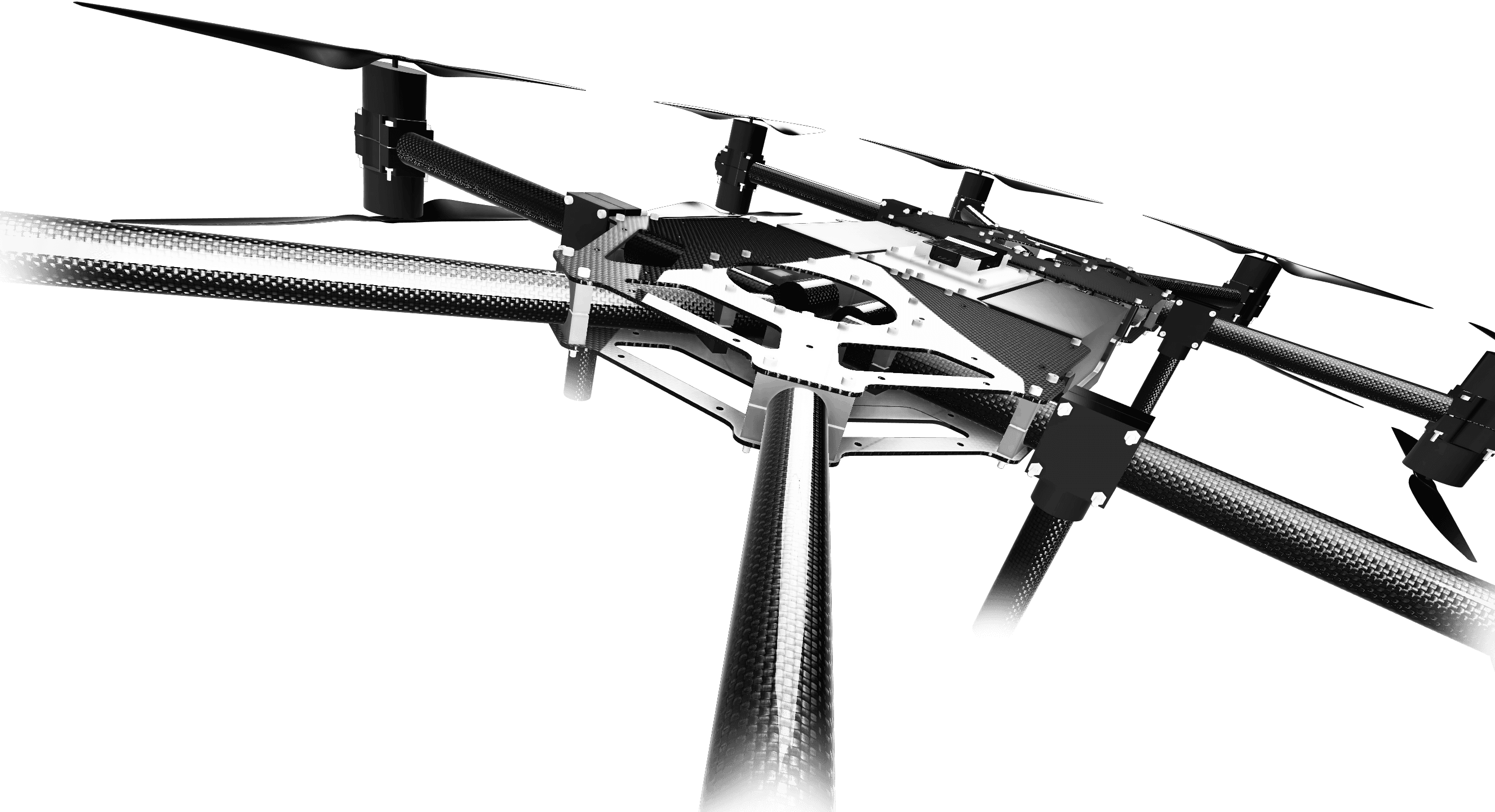
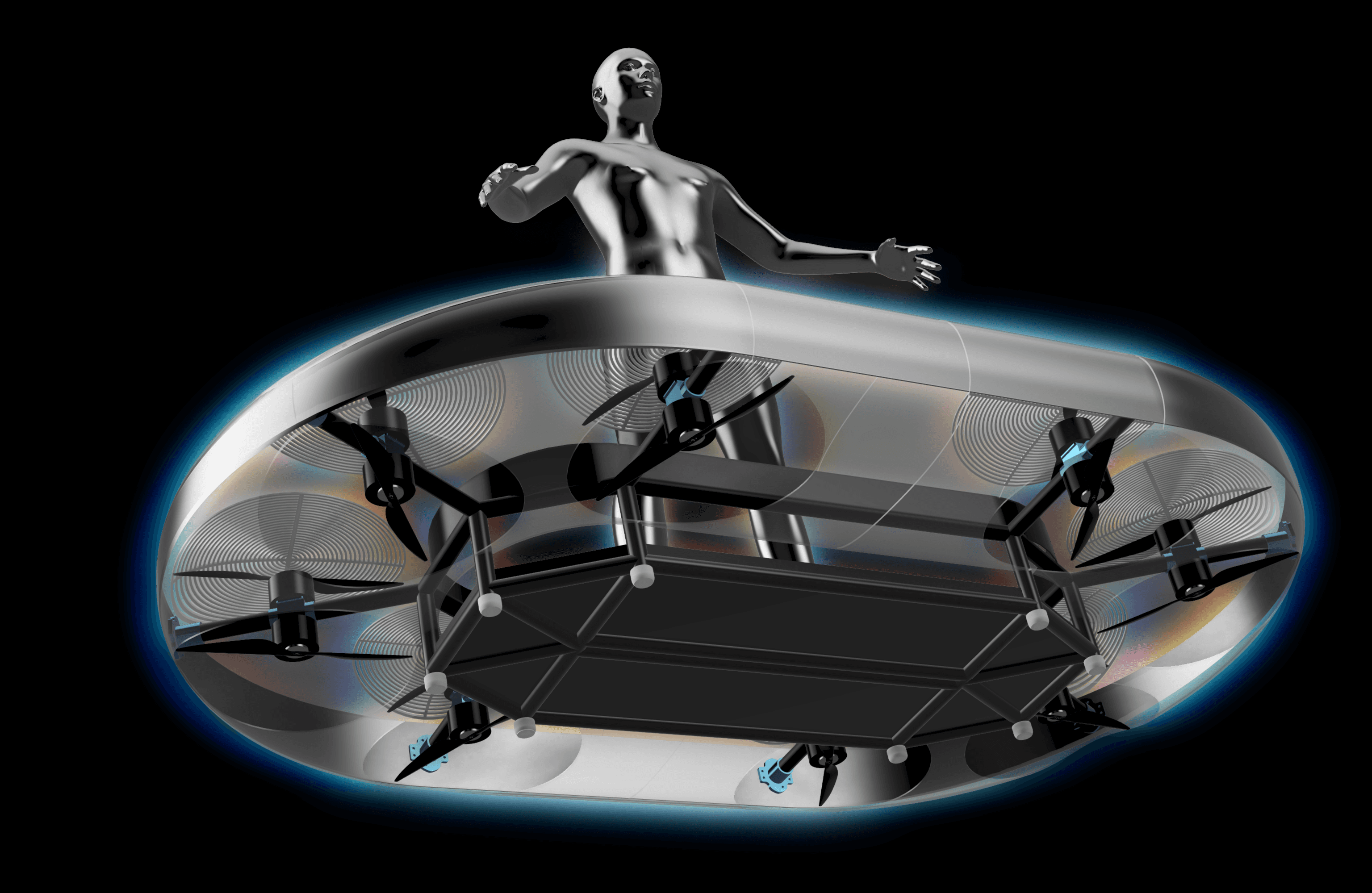
Our first hovercraft build is a 16-motor coaxial multirotor architecture arranged in a symmetric annular planform. Designed for human-mounted operation, the operator stands centrally above the thrust plane in a hoverboard-aligned stance, aligning the combined center of mass with the thrust axis. At full power, the platform delivers ~260 kgf peak static lift, providing thrust margin for controlled hover, transients, and fault-tolerant operation. 

Features

Details

3D Illustration

Propulsion

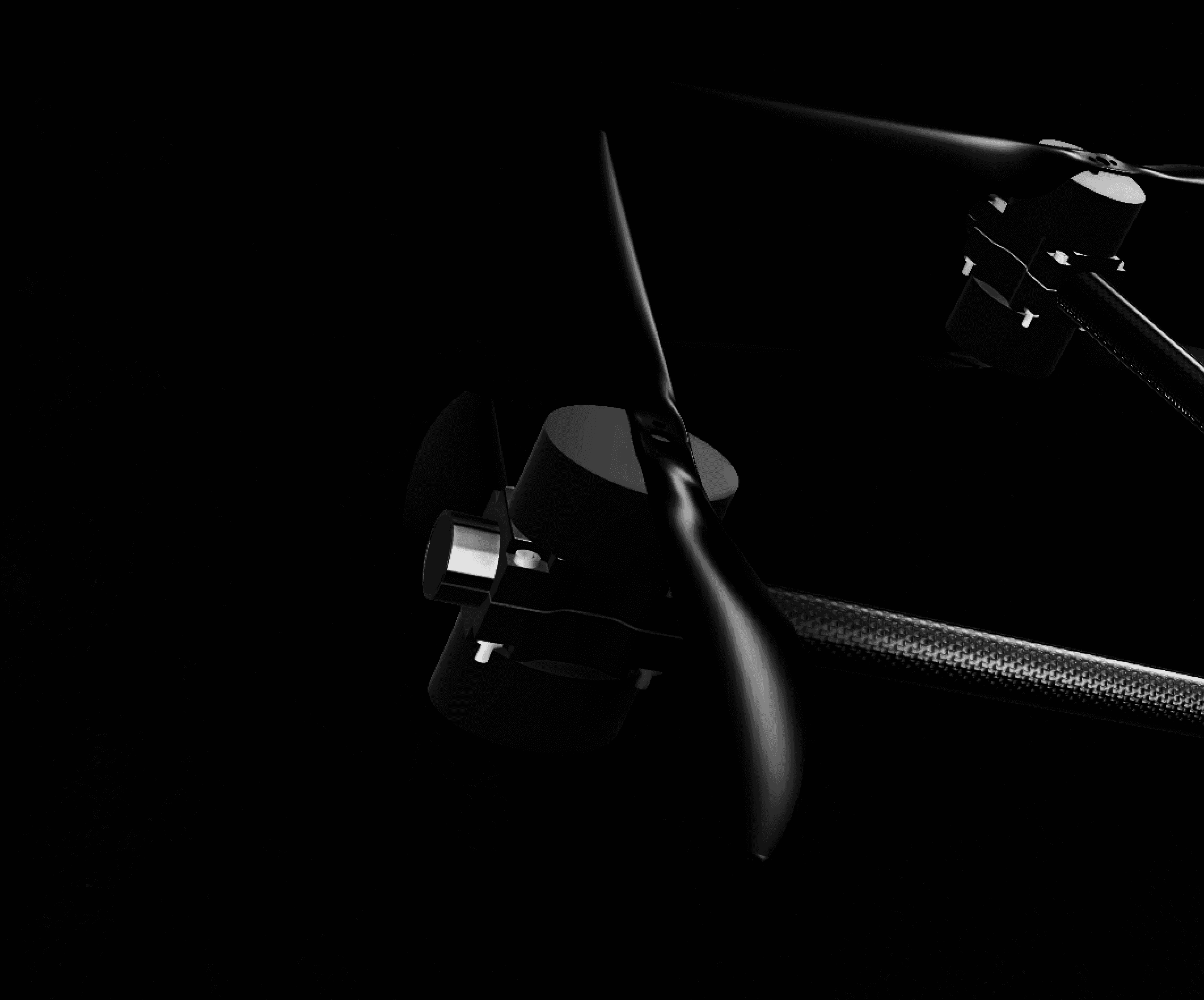
I. 16-motor distributed layout in 8 coaxial pairs II. Coaxial spacing tuned to characterize interference losses III. Thrust sharing and failure-case redistribution IV. Full-power hover and transient thrust response

Propulsion

I. 16-motor distributed layout in 8 coaxial pairs II. Coaxial spacing tuned to characterize interference losses III. Thrust sharing and failure-case redistribution IV. Full-power hover and transient thrust response

Propulsion

I. 16-motor distributed layout in 8 coaxial pairs II. Coaxial spacing tuned to characterize interference losses III. Thrust sharing and failure-case redistribution IV. Full-power hover and transient thrust response

Structure

I. Motor loads resolved into primary members II. Bending and torsion under hover III. Joint stress at peak thrust IV. Deflection limits for human margins

Structure

I. Motor loads resolved into primary members II. Bending and torsion under hover III. Joint stress at peak thrust IV. Deflection limits for human margins

Structure

I. Motor loads resolved into primary members II. Bending and torsion under hover III. Joint stress at peak thrust IV. Deflection limits for human margins

Power

I. Dual isolated 24S battery packs II. High-current power distribution III. Thermal limits under sustained hover IV. Energy bounds for scaling

Power

I. Dual isolated 24S battery packs II. High-current power distribution III. Thermal limits under sustained hover IV. Energy bounds for scaling

Power

I. Dual isolated 24S battery packs II. High-current power distribution III. Thermal limits under sustained hover IV. Energy bounds for scaling

Safety

I. Redundant flight controllers II. Independent power buses III. Hardwired emergency stop IV. Fault detection and isolation

Safety

I. Redundant flight controllers II. Independent power buses III. Hardwired emergency stop IV. Fault detection and isolation

Safety

I. Redundant flight controllers II. Independent power buses III. Hardwired emergency stop IV. Fault detection and isolation

Our projects

Project Name:

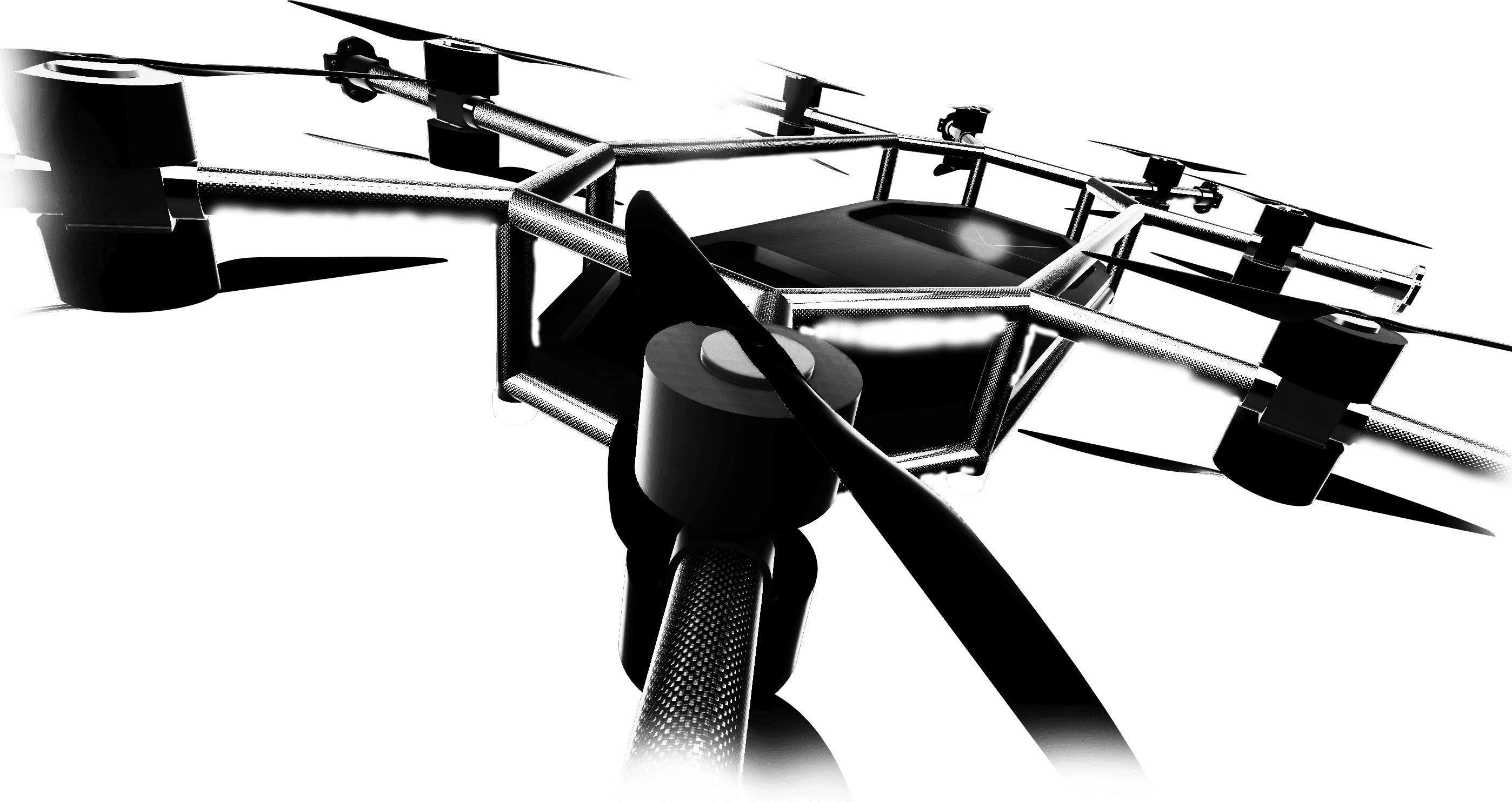
20kgf Lift Coaxial Testbed

Description

The 20 kgf chassis serves as a downscaled structural validation prototype informing the design of the 260 kgf full-scale system.

Release Date:

Jan 4, 2026
Project Name:

260kgf Lift Full-Scale Chassis

Description

Full-scale load-bearing chassis developed to validate structural integrity and propulsion integration at 260 kgf vertical lift.

Release Date:

Jan 31, 2026
Project Name:

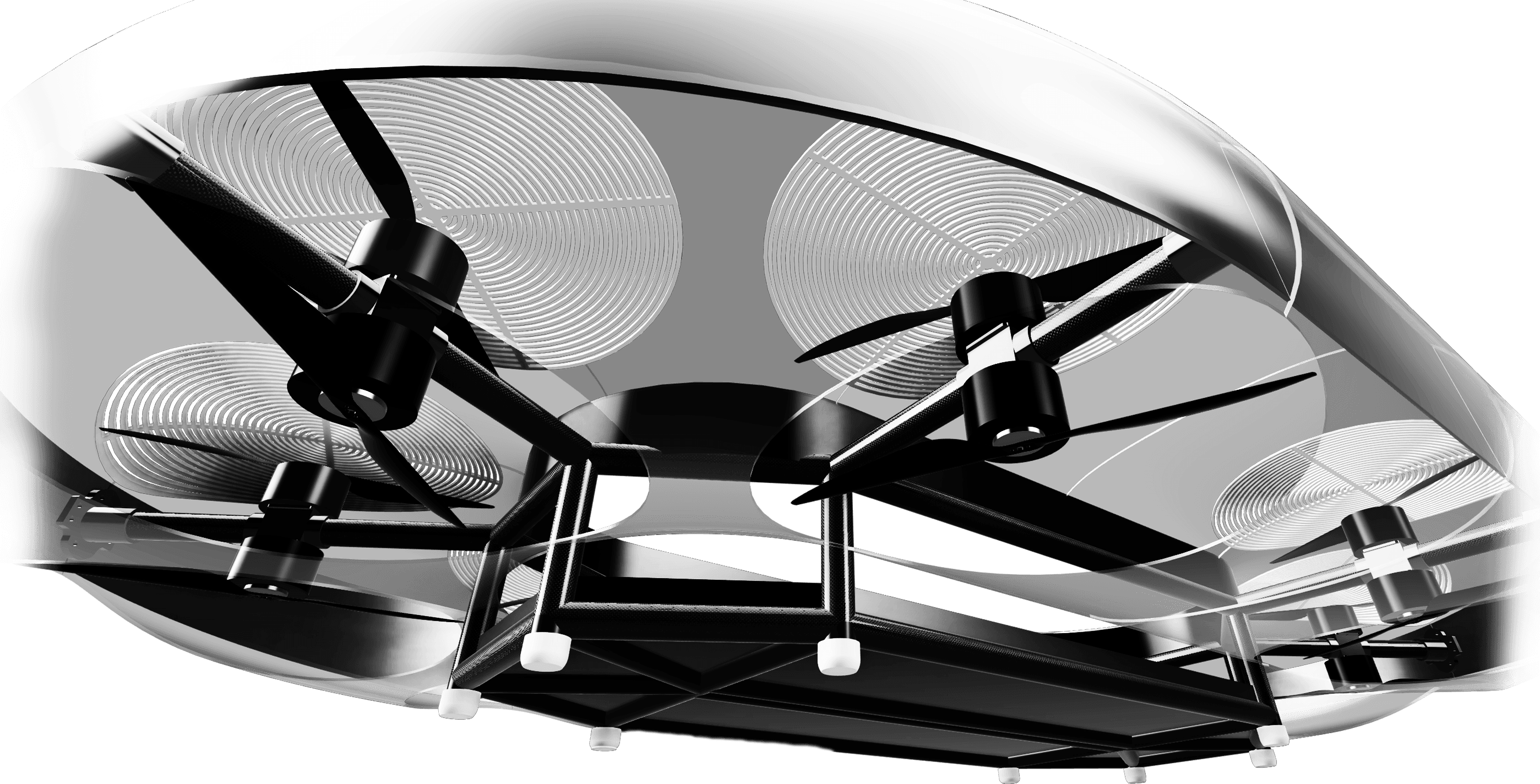
Human–Rotor Interaction Safety Shroud

Description

Design of an erodynamically integrated safety structure to isolate rotating propeller disk from human contact while preserving thermal dissipation and flow efficiency.

Release Date:

Feb 20, 2026

Our Timeline

I. Small prototype launch

Dec 2025

I. Small prototype launch

Dec 2025

I. Small prototype launch

Dec 2025

II. Full-scale prototype launch

Feb 2026

II. Full-scale prototype launch

Feb 2026

II. Full-scale prototype launch

Feb 2026

III. Human flight testing and validation

Feb - April 2026

III. Human flight testing and validation

Feb - April 2026

III. Human flight testing and validation

Feb - April 2026

IV. Pilot-ready system demonstration

May 2026

IV. Pilot-ready system demonstration

May 2026

IV. Pilot-ready system demonstration

May 2026

Meet the Team

Core Members

Ezenbaatar Batjargal

Team Lead
UC Berkeley | B.S. Physics, Mechnical Engineering

Ezen holds Berkeley’s student rocketry altitude record with a self-designed three-stage rocket. He led AI and FPV drone racing teams, and currently works across controls, materials, and manufacturing labs.

Ezen holds Berkeley’s student rocketry altitude record with a self-designed three-stage rocket. He led AI and FPV drone racing teams, and currently works across controls, materials, and manufacturing labs.

Ezen holds Berkeley’s student rocketry altitude record with a self-designed three-stage rocket. He led AI and FPV drone racing teams, and currently works across controls, materials, and manufacturing labs.

Bubble Yu

Mechanical Design
Stanford | B.S., Mechanical Engineering, Computer Science

Bubble works at the intersection of mechatronics and human performance. She has founded two startups and holds utility and provisional patents in biomechatronic system design.

Bubble works at the intersection of mechatronics and human performance. She has founded two startups and holds utility and provisional patents in biomechatronic system design.

Bubble works at the intersection of mechatronics and human performance. She has founded two startups and holds utility and provisional patents in biomechatronic system design.

Joshua Cheung

Mechanical Design & Powertrain
Stanford (Ph.D., Mechanical Engineering)

Mechanical Design & Powertrain Systems
Stanford (Ph.D., Mechanical Engineering)

Mechanical Design & Powertrain Systems
Stanford (Ph.D., Mechanical Engineering)

Josh conducts research on optics, automation, and batteries. His work includes publications, presentations, and a provisional patent in ultrafast-laser sapphire nanofabrication.

Josh conducts research on optics, automation, and batteries. His work includes publications, presentations, and a provisional patent in ultrafast-laser sapphire nanofabrication.

Josh conducts research on optics, automation, and batteries. His work includes publications, presentations, and a provisional patent in ultrafast-laser sapphire nanofabrication.

Jonathan Lie

Powertrain Systems
Stanford | B.S., Electrical Engineering

Jonathan is an electrical engineer and safety lead at Stanford UAV, founder of the AFJROTC Drone Operations Team at Rancho Verde High School, and a licensed HAM radio technician with hands-on repair experience at the March Field Air Museum.

Jonathan is an electrical engineer and safety lead at Stanford UAV, founder of the AFJROTC Drone Operations Team at Rancho Verde High School, and a licensed HAM radio technician with hands-on repair experience at the March Field Air Museum.

Jonathan is an electrical engineer and safety lead at Stanford UAV, founder of the AFJROTC Drone Operations Team at Rancho Verde High School, and a licensed HAM radio technician with hands-on repair experience at the March Field Air Museum.

Taiyo Luke Mitsuoka

Business Outreach
UC Berkeley | B.S., Political Science

Taiyo is Co-Founder and COO of Revive&Survive LLC, with experience spanning business strategy, research, consulting, international relations, and web marketing through roles at Plus Curiosity, Unchain Inc., Backstage, and kinobo.inc.

Taiyo is Co-Founder and COO of Revive&Survive LLC, with experience spanning business strategy, research, consulting, international relations, and web marketing through roles at Plus Curiosity, Unchain Inc., Backstage, and kinobo.inc.

Taiyo is Co-Founder and COO of Revive&Survive LLC, with experience spanning business strategy, research, consulting, international relations, and web marketing through roles at Plus Curiosity, Unchain Inc., Backstage, and kinobo.inc.

Lana Thyen

Control Infrastructure
Stanford | B.S., Computer Science

Lana has built a stable over-the-shoulder GoPro mount for competition climbing footage, designed an AI communication device for children with speech impairments, and modeled asteroid orbit trajectories through computational analysis.

Lana has built a stable over-the-shoulder GoPro mount for competition climbing footage, designed an AI communication device for children with speech impairments, and modeled asteroid orbit trajectories through computational analysis.

Lana has built a stable over-the-shoulder GoPro mount for competition climbing footage, designed an AI communication device for children with speech impairments, and modeled asteroid orbit trajectories through computational analysis.

Advisors

Yuman Gao

PhD Student at Zhejiang University
Visiting Student Researcher at UC Berkeley

Jiaze Cai

EECS PhD @ MIT
UC Berkeley | Texas A&M

Adam Dai

PhD Candidate at Stanford | Navigation and Autonomy

Let’s Connect

Whether you're interested in becoming a team member, advisor or sponsor, we'd love to hear from you.